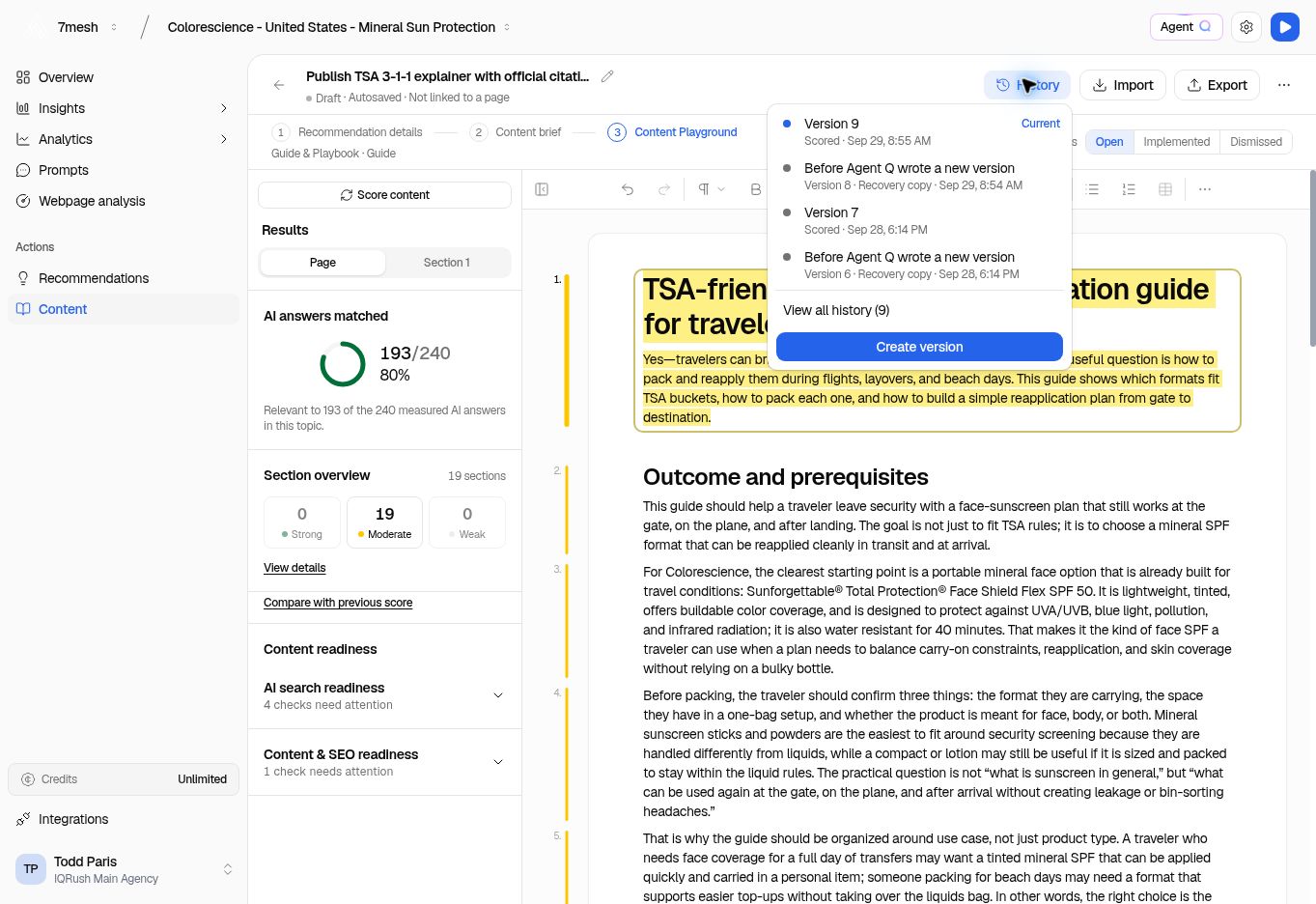
Autosaved protects your current working draft. History lets you save and inspect particular versions.
History showing the current version, scored versions, recovery copies, and Create version.

Use the version name and date to identify the text you want. A recovery copy is separate from the current working version.

Save a named version

  1. Open the document in Content Playground.
  2. Wait for the latest text to save.
  3. Select History.
  4. Select Create version.
  5. Enter a name, such as “First editorial review,” or leave the name empty for default naming.
  6. Select Create version in the dialog.
Save a named version before a substantial rewrite or an editorial handoff. A useful name tells your teammate why the version matters.

Inspect an earlier version

  1. Open History.
  2. Select a saved version.
  3. Use View all history if the one you need is not in the recent list.
  4. Read the version in the preview. Use Show changes when it is available to compare the text.
  5. Use Back to current version when you are finished.
Opening a version for preview does not, by itself, replace the working draft.

Restore a version

If you want the earlier text to become the working draft, choose Restore this version from the preview and read the confirmation. Select Restore version to replace the current text. The current document is saved as a recovery version before the replacement. Check the restored text and its save status afterward. A restored draft may need scoring again. A score belongs to the text that was measured, so use the current score state to decide whether to update it.

Understand automatic entries

History can include entries created by scoring or by preserving text before another action, such as Before Agent Q wrote a new version. These entries help you recover earlier text; they do not indicate editorial approval or publication. Next: Review and export.